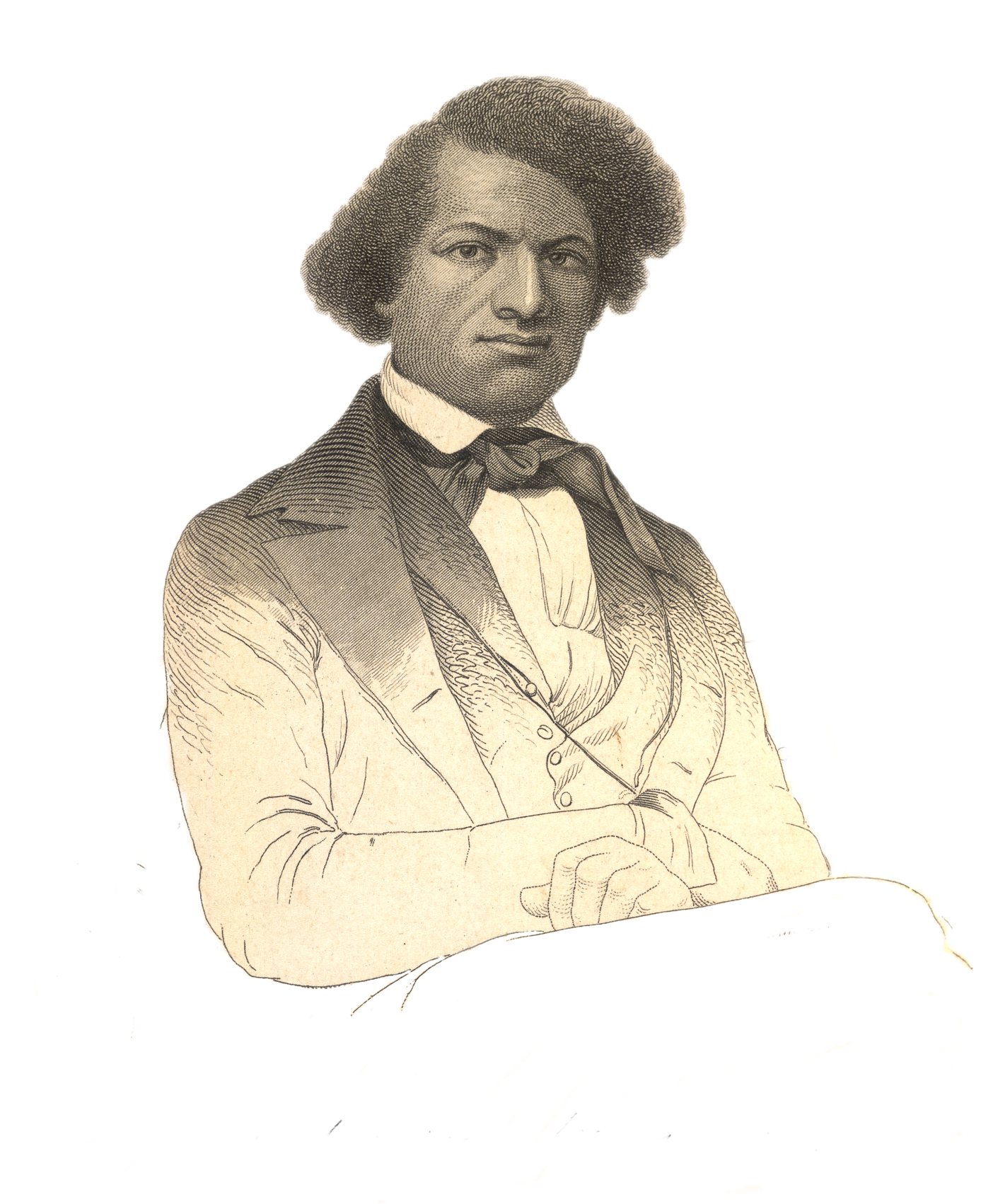
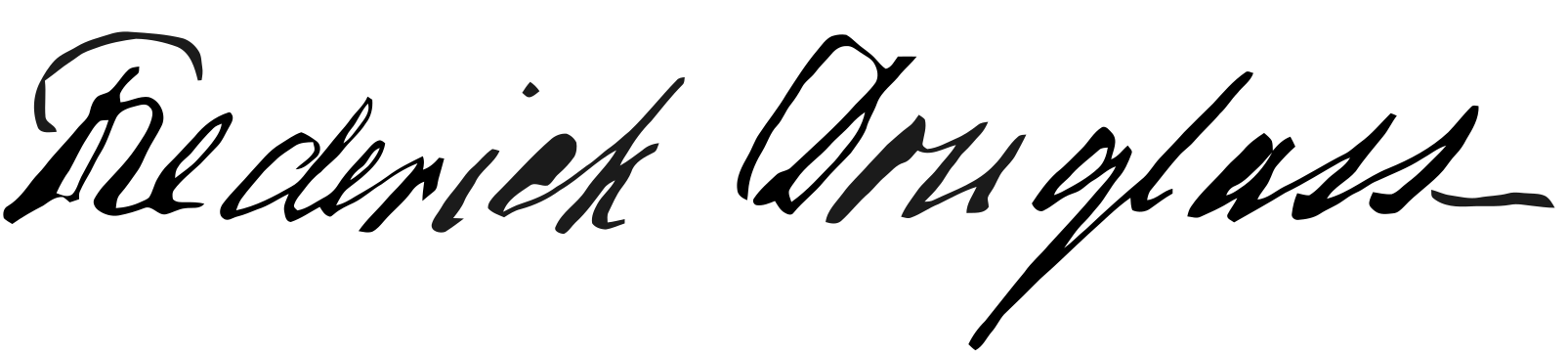
Frederick Douglass originally Frederick Augustus Washington Bailey (1817- 1895). Portrait. American abolitioni. Image taken from Narrative of the Life of Frederick Douglass an American Slave written by himself Second Dublin edition. With a portrait. Originally published in Webb & Chapman: Dublin 1846
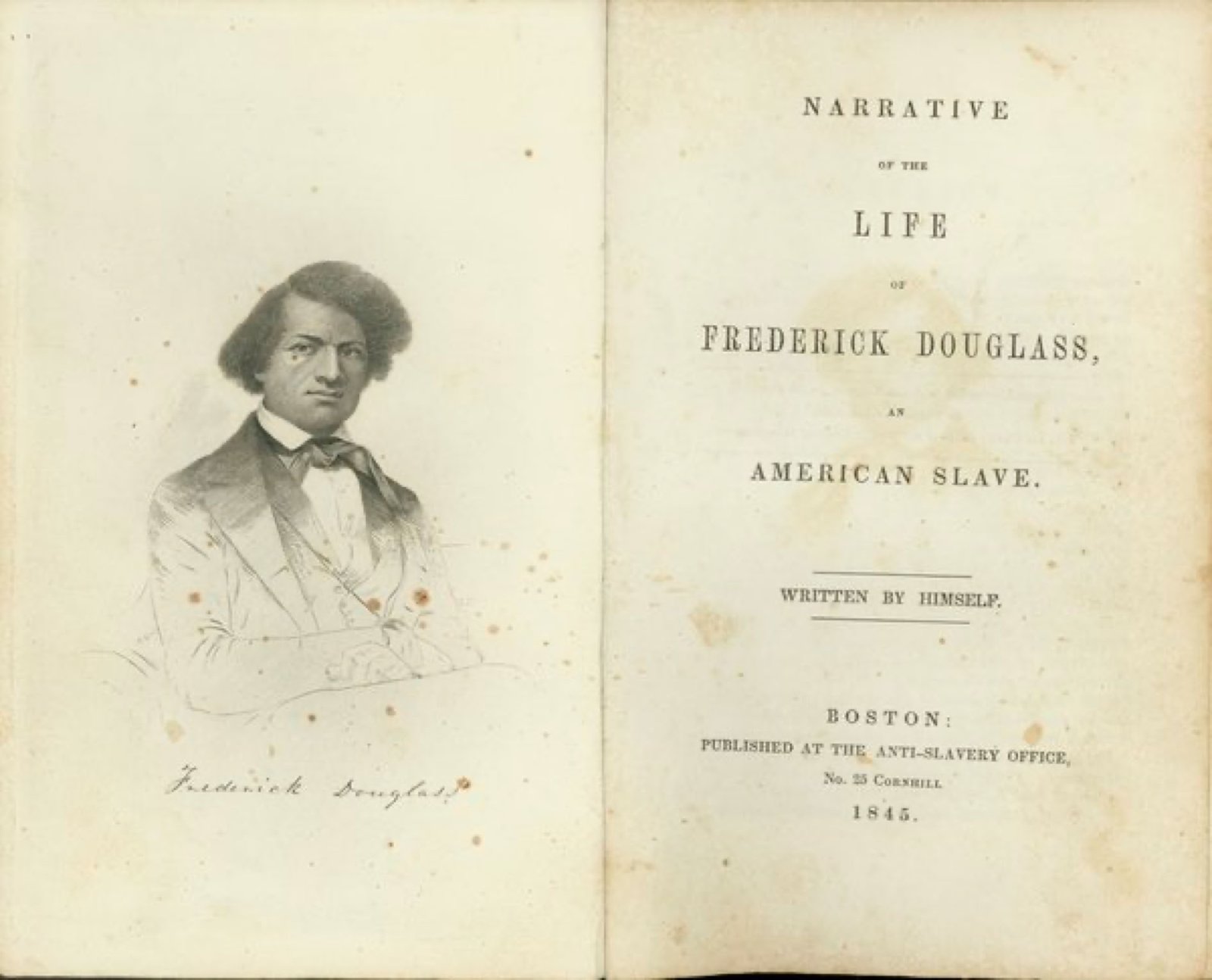
Frederick Douglass traveled to Ireland in 1845-46, arriving just three months after he had published his autobiography Narrative of the Life of Frederick Douglass, An American Slave, Written by Himself. He was inspired and transformed by his time in Ireland.
He was shocked and appalled by the living conditions of the Irish peasantry and likened them to conditions endured by slaves on American plantations. Douglass was greeted in cities and towns including Dublin, Belfast, and Cork by swells of enthusiastic crowds. Although Douglass continued his speaking tour in Scotland and England, it was his experience in Ireland that he described as “transformative. " Douglass often recalled that his time in “Dear Old Ireland” - the first country outside of the U.S. to publish his autobiography - had given him “a new life.”
Frederick Douglass Ireland Project director Professor Christine Kinealy has written extensively on Douglass's time on the island. Her book Frederick Douglass and Ireland: In his own words (Routledge), a compilation of Frederick Douglass's speeches and writings while in Ireland, was published in June 2018.
DOUGLASS IN IRELAND
[Frederick] Douglass had been born into slavery in Maryland in 1818. His given name was Frederick Augustus Washington Bailey, but he changed it to Frederick Douglass... When aged about 12, two Irishmen working in the same ship-yard had advised him to, ‘run away to the north’. Eight years later, aged only 20, Douglass escaped from his servitude..
... In 1845, Douglass published his autobiography, The Narrative of the Life of Frederick Douglass, An American Slave. The resulting publicity put him in danger of capture, so he was persuaded to travel to Ireland and from there, to Britain, for safety and to lecture on anti-slavery. Douglass arrived in Ireland on 31 August, 1845. He wrote immediately to friends in America, ‘I am now safe in old Ireland, in the beautiful city of Dublin’. Initially, his stay was to be of only a few weeks’ duration, but it was prolonged when a Dublin abolitionist, Richard Webb, offered to produce an Irish version of the Narrative. ...
... [B]eing in Ireland’s capital city proved a liberating experience [for Douglass]:
One of the most pleasing features of my visit, thus far, has been a total absence of all manifestations of
prejudice against me, on account of my color. The change of circumstances, in this, is particularly striking …
I find myself not treated as a colour, but as a man – not as a thing, but as a child of the common Father of us
all.
... By the 1840s, Daniel O’Connell was the most famous and outspoken abolitionist on both sides of the Atlantic. He had been committed to this cause since the 1820s, and, as a new member of the British parliament following Catholic Emancipation, had played a pivotal role in ending slavery in the British Empire. O’Connell’s abolitionist activities were known and simultaneously applauded and deplored in the United States...
... O’Connell was at the radical end of the abolition movement, consistently arguing for immediate, not gradual, abolition, and insisting that black people were the equals of white people – an unpopular view at the time. Unusually also, O’Connell saw the ending of slavery, and his demand for Irish independence, as part of wider struggle for human rights, a view not shared by many abolitionists or nationalists. He averred:
I am the friend of liberty in every clime, class and colour. My sympathy is not confined to the limits of my own
green island; my spirit walks abroad on sea and land, and wherever there is oppression, I hate the oppressor.
...[O]n arrival in Ireland, Douglass claimed that he was only concerned with only one issue – the ending of slavery. However, O’Connell’s internationalist view on human suffering was to have a profound impact on Douglass’s own political development.
... Douglass left Dublin at the beginning of October, to travel to other parts of the country. He gave lectures in Wexford, Waterford, Youghal, Limerick and Belfast. His treatment as an equal continued to surprise and delight him, [as] he [wrote], ‘I saw no-one that seemed to be shocked or disturbed at my dark presence. No one seemed to feel himself contaminated by contact with me’.
... Douglass left Ireland in January 1846. He continued his tour in Britain, staying away from America for almost two years. In total, he gave almost 200 lectures, over 40 of which had been delivered in Ireland.